
Your Dog Needs a Consistent Walk Schedule. Here’s What Happens When They Don’t Get One.
Life is busy. You know your dog needs more. You intend to do better next week.
This is not a guilt post. It is an honest look at what inconsistency actually costs your dog, and how to fix it without overhauling your schedule.
Your Dog Is Running an Internal Clock

Dogs are not just creatures of habit by preference. They are wired for routine at a physiological level.
A dog's hypothalamus, the part of the brain that regulates instincts and emotional responses, is deeply sensitive to predictability. When a dog can anticipate what is coming next (when they will eat, when they will go outside, when movement and exploration are coming), their nervous system settles. When they cannot, it does not.
Research published in the peer-reviewed journal Animals in 2024 reviewed cortisol dynamics in dogs across decades of published studies and found that dogs with consistent routines and positive daily interactions generally show more stable cortisol levels. The review noted that consistent routine, defined as a predictable daily structure including regular exercise schedules, helps reduce uncertainty and creates a stable internal environment for the dog (Rea et al., Animals 14(23), 2024).
Cortisol is the primary stress hormone. Chronically elevated cortisol does not just affect mood. It affects immune function, digestion, learning capacity, and behavior. A dog running on a background hum of stress and uncertainty is not just a little anxious. They are a dog whose capacity to rest, regulate, and respond calmly to the world is genuinely compromised.
Consistent walks are not a nice-to-have for dogs. They are a biological anchor.
What Inconsistency Looks Like in Your Home
You may not describe your dog's life as inconsistent. You walk them most days. Sometimes twice. Some days not at all, depending on what the week throws at you. We all get busy, life happens and we cannot always predict what is coming.
From your dog's perspective, that unpredictability has a cost. Not because dogs are fragile, but because they are pattern-oriented animals who use environmental cues to build a sense of safety in the world. When those cues are unreliable, the nervous system compensates by staying alert.
This shows up in ways that are easy to misread as behavioral problems:
- The barking that escalates around the time you usually get home.
- The restlessness in the afternoon that makes it impossible for them to settle while you are on a call.
- The destructive chewing, the door scratching, the pacing.
These are not bad behavior. They are the predictable expression of a dog whose needs have gone unmet and whose nervous system is trying to manage the gap.
As the Dogtopia canine wellness team has noted, when dogs cannot anticipate when their needs will be met, they move through the day in a heightened state of alert, constantly scanning for cues. Over time, that low-level vigilance becomes a baseline. It shapes how they respond to everything else.
Regular, predictable walks interrupt that cycle. A dog who knows that midday movement is coming does not spend the morning bracing for it, they look forward to the routine!
The Physical Case Is Just as Clear
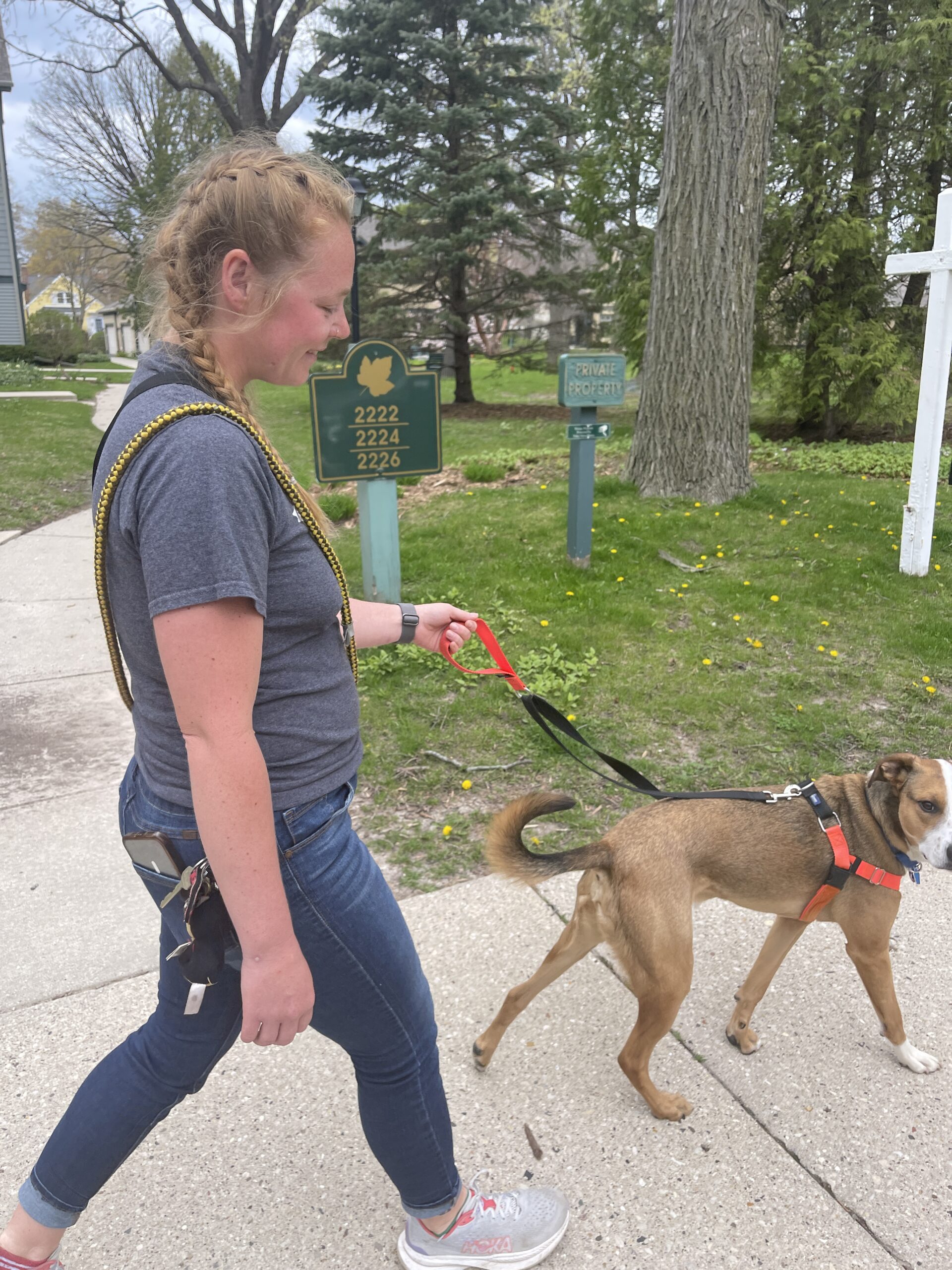
Beyond behavior and stress, the physical benefits of consistent walking are well documented.
Maintaining a healthy weight is the obvious one. Canine obesity is closely linked to conditions including diabetes, cardiovascular disease, and joint deterioration, and regular exercise is one of the most reliable preventive tools available. But the physical benefits go further than weight management, just as they do for us humans.
Routine walks support cardiovascular fitness, muscle tone, and joint mobility, especially as dogs age. Regular movement helps maintain flexibility and delay the onset of age-related stiffness that affects so many senior dogs. Walking also promotes healthy digestion and supports urinary tract health. Dogs who have reliable, consistent bathroom breaks are less likely to experience the discomfort and health complications that come from holding urine for extended periods.
Research published in BMC Public Health has described the relationship between regular dog walking and sustained physical health ou
tcomes for dogs and owners alike, noting that dog walking habits, once formed through consistent context and repetition, tend to be the most durable form of physical activity routine available to both the dog and the person walking them (Brown et al., BMC Public Health, 2018; referencing Westgarth et al., PLOS ONE, 2017).
In short: a dog who walks consistently stays healthier longer.
The Mental and Behavioral Payoff
Dogs experience the world primarily through their noses. A walk is not just exercise. It is information processing, environmental orientation, and cognitive engagement all at once. Every sniff on a familiar route represents the world making sense to them. Every new scent on a park path is a problem solved, a curiosity satisfied, a mind genuinely engaged and enriched.
Research on olfactory enrichment in dogs, including the 2020 study by Amaya and colleagues published in Animals at the University of Queensland, has found that sensory engagement has measurable physiological effects on the autonomic nervous system, shifting dogs toward the parasympathetic state associated with calm and recovery rather than arousal (Amaya et al., Animals 10(8), 2020). A walk that allows a dog to sniff freely is doing something real for their nervous system, not just their muscles.
When walks happen on a schedule, the cumulative benefit compounds. Dogs who receive consistent daily enrichment build familiarity with their environment, develop confidence on familiar routes, and become less reactive to the ordinary stimuli of city life: other dogs, passing cyclists, unfamiliar sounds. Confidence is built through repetition. It does not arrive any other way.
The research on habit formation in dog walking, published in American Journal of Preventive Medicine, found that habit was the strongest predictor of consistent dog walking, more predictive than attitude or intention, and that dogs themselves reinforced those habits through their behavior once routines were established (Brown et al., referencing Johnson & Meadows, American Journal of Preventive Medicine, 2010, summarized in Rhodes et al., American Journal of Preventive Medicine, 2018).
What this means practically: once a schedule is in place, your dog helps maintain it. They become the reminder. The pull toward the door at 11:30am is not inconvenient. It is the sound of a healthy routine working exactly as it should.
The Honest Problem: You Cannot Always Be There
Here is where this gets practical.
You believe in walks. You value them for your dog. The problem is not intention, it is capacity. Your calendar fills up. Travel happens. Long days happen. And your dog, who does not understand quarterly reviews or back-to-back client calls, waits.
This is exactly the problem Milwaukee Paws Pet Care exists to solve.
Our recurring walk clients are, by and large, people who care deeply about their dogs and have simply run out of room in the day to show it consistently. Our job is to make sure the schedule holds even when yours does not.
We offer multiple walk formats designed with different dogs and different routines in mind.
 Regular Recurring Walks are exactly what they sound like: scheduled, reliable, consistent walks that happen whether or not your day cooperates. Your dog gets the midday movement their body and nervous system depend on. You get the peace of mind of knowing it is handled. No scrambling, no guilt, no dog who has been waiting since 7am for relief. Whether you need a 30 min walk or an hour, we have you covered.
- Monthly Memberships are a set schedule of weekly walks that you pay for up front each month. The benefit of these are you get priority scheduling with our team, no cancellation fees, and you know we will always be available.
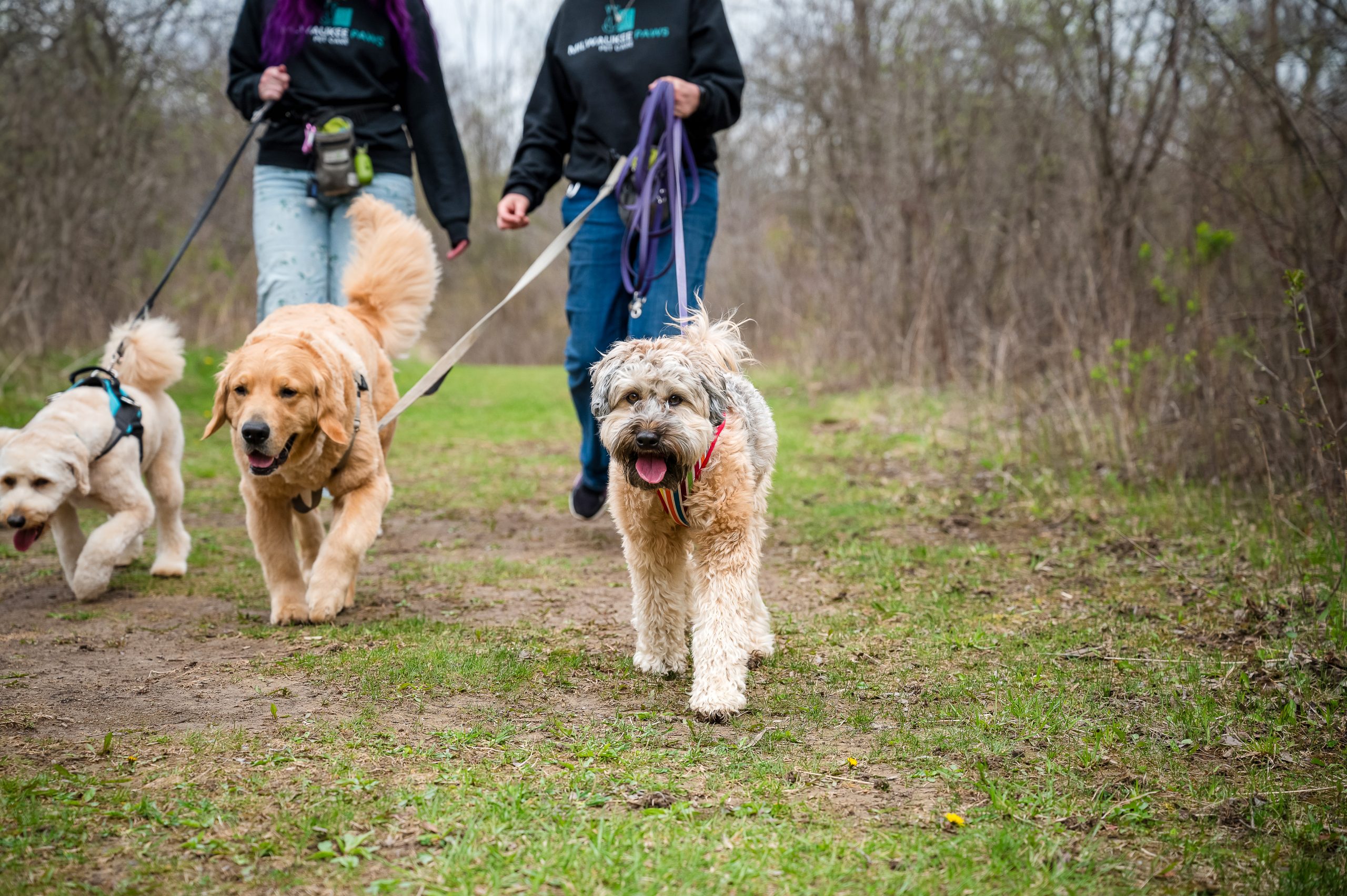
- Urban Adventure Walks go a step further. These are designed for dogs who benefit from a richer sensory experience. Milwaukee's parks, green spaces, and lakefront trails offer something that a neighborhood loop simply cannot: new terrain, new scents, genuine exploration. For higher-energy dogs, for dogs who carry anxiety or reactivity, and for dogs who simply thrive on novelty, Urban Adventures provide the kind of decompression that changes how the rest of the day goes.
- Playgroups are play sessions with other dogs at our sister facility, Canine Einstein. Playgroups are supervised by well trained staff who monitor and interrupt play that is becoming stressful, too rambunctious or not safe. Playgroups are a wonderful way for social dogs to have safe interactions with other dogs.
 Regular Recurring Walks
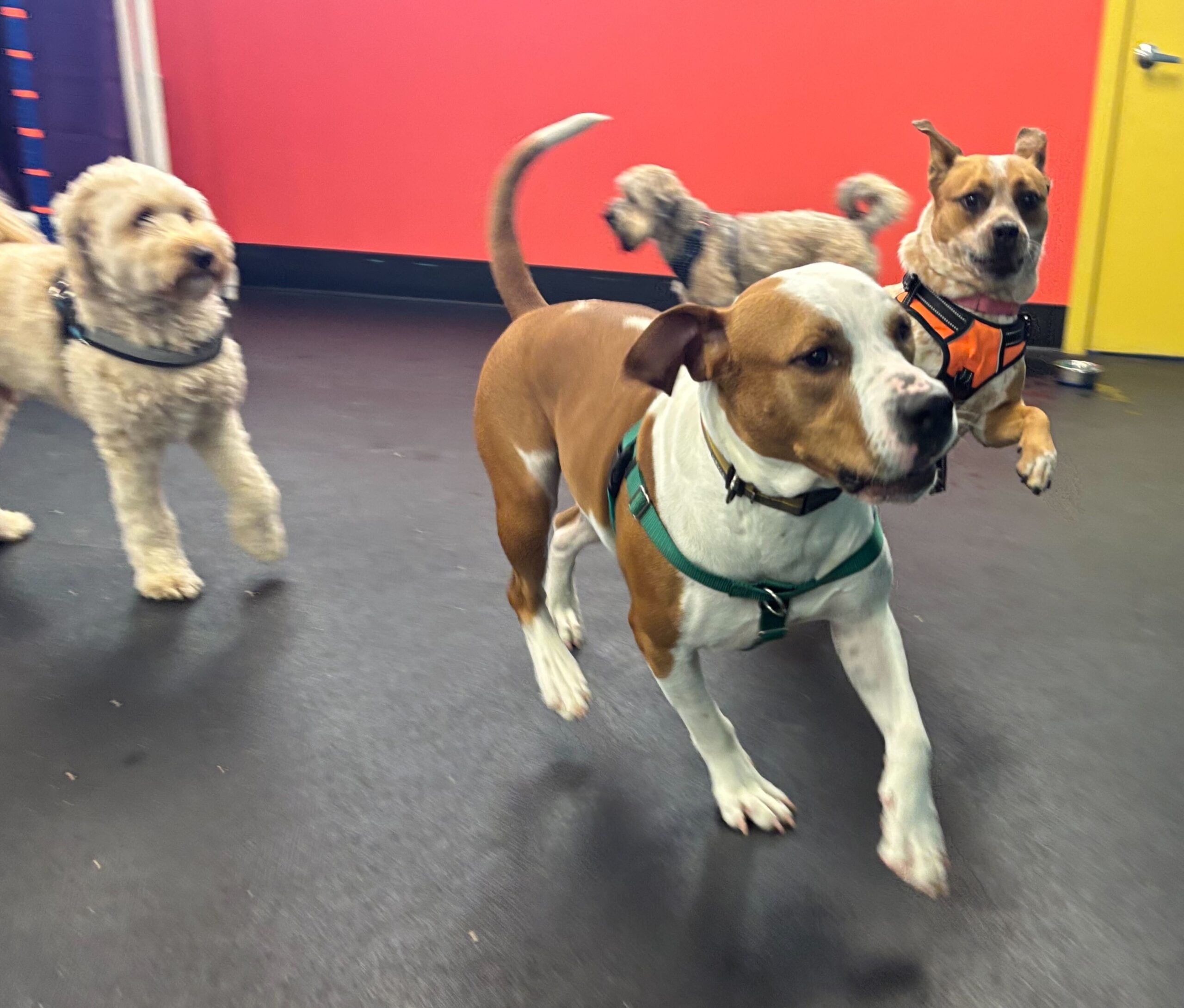 All of our walk formats are staffed by walkers who understand dog behavior, not just dog management. There is a difference. Our team knows how to read a dog, adjust the experience when needed, and communicate clearly with you about how your dog is doing. We do not use aversive tools to make it "easier to handle" the dogs. Instead, we read their body language and support them through their adventure.
When Training and Walks Work Together
A well-exercised, well-routined dog is a dog who can actually learn. Physical and mental needs that are consistently met lower the stress baseline, and a lower stress baseline means a dog who is present, receptive, and capable of the kind of focused engagement that training requires.
If your dog is working through reactivity, building confidence, or learning new skills with the team at Canine Einstein, consistent daily walks are not separate from that work. They support it. The skills your dog practices in training generalize faster when their daily life includes the structure, movement, and enrichment they need to show up ready.
An added benefit of using Milwaukee Paws Pet Care to support your training, is that all of our walkers are trained by our trainers on staff and have access to them if a concern or question should arrive. The personalized care plan for each pet includes their training notes for staff to follow and reinforce.
Making the Schedule Hold
The best thing you can do for your dog is not the longest walk or the most elaborate enrichment setup. It is consistency. A predictable, reliable schedule, repeated day after day, is what transforms good intentions into genuine wellbeing.
If your schedule cannot guarantee that, ours can.
Book your first recurring walk with Milwaukee Paws Pet Care today. Tell us about your dog, your neighborhood, and what your week looks like. Scheduling a meet and greet is easy and convenient!
During the meet and greet, we will discuss your individual dogs needs, routines and preferences. Our admin team will personalize their care plan to ensure we are consistent with your routines as well.